
New Perspective in Drug Induced Sleep Endoscopy (DISE)
5VsEs Prototype & MLAEPi alternative
INTRODUCTION
Obstructive Sleep Apnea (OSA) shows an estimated worldwide prevalence of one billion people [1]. In OSA treatment it is significant to recognize the anatomical structure involved in Upper Airway repetitive collapse for a site specific therapy.
Drug Induced Sleep endoscopy (DISE) is a validate diagnostic procedure for surgical and non surgical personalized treatment [2].
Obstructive sites percentages detected during DISE seem to be similar to the percentages identified by Natural Sleep Endoscopy (NSE) [3,4].
Aim of the research program
The program was designed on the basis of two open questions proved in DISE field literature:
- the bias due to operator-dependent diagnosis. [5]
- the management of pharmacological sedation level. [6]
To improve research and reliability of diagnosis by DISE we:
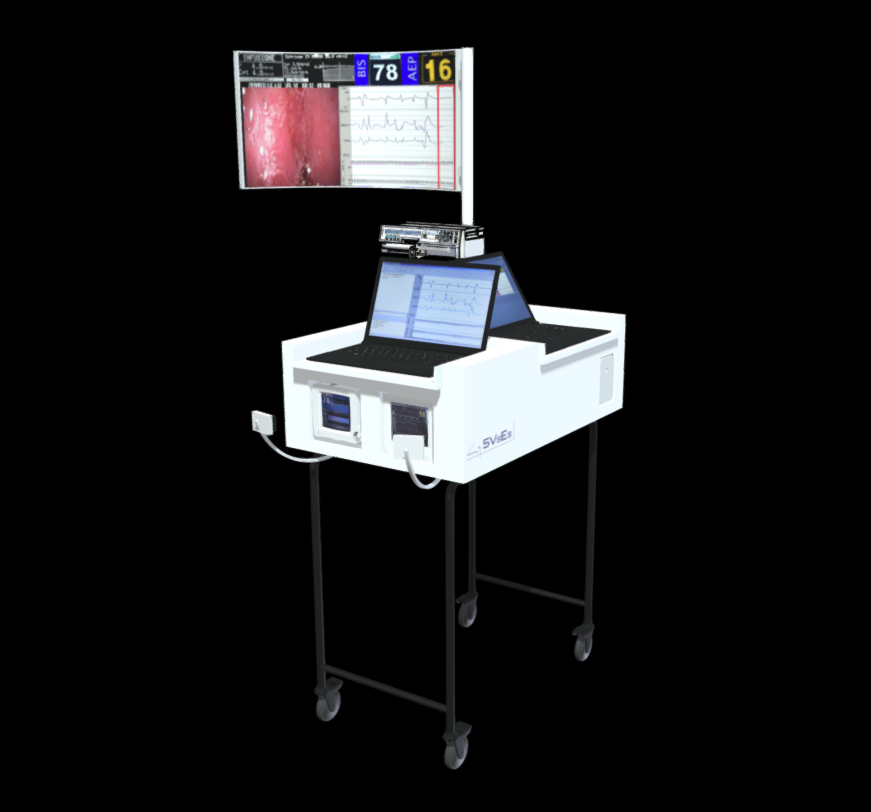
- manufactured a new prototype called 5 Video Stream Experimental System (5VsEs) [7] capable of ergonomically showing all of the decisional parameters on a single monitor, recording and storing them;
- performed an investigation on Middle Latency Auditory Evoked Potential Index (MLAEPi) [8] as a measure of sedative effect during the sleep induced by Propofol. The purpose of this study is to assess the advantages of MLAEPi Vs the standard BIS methodology during DISE.
Materials and background
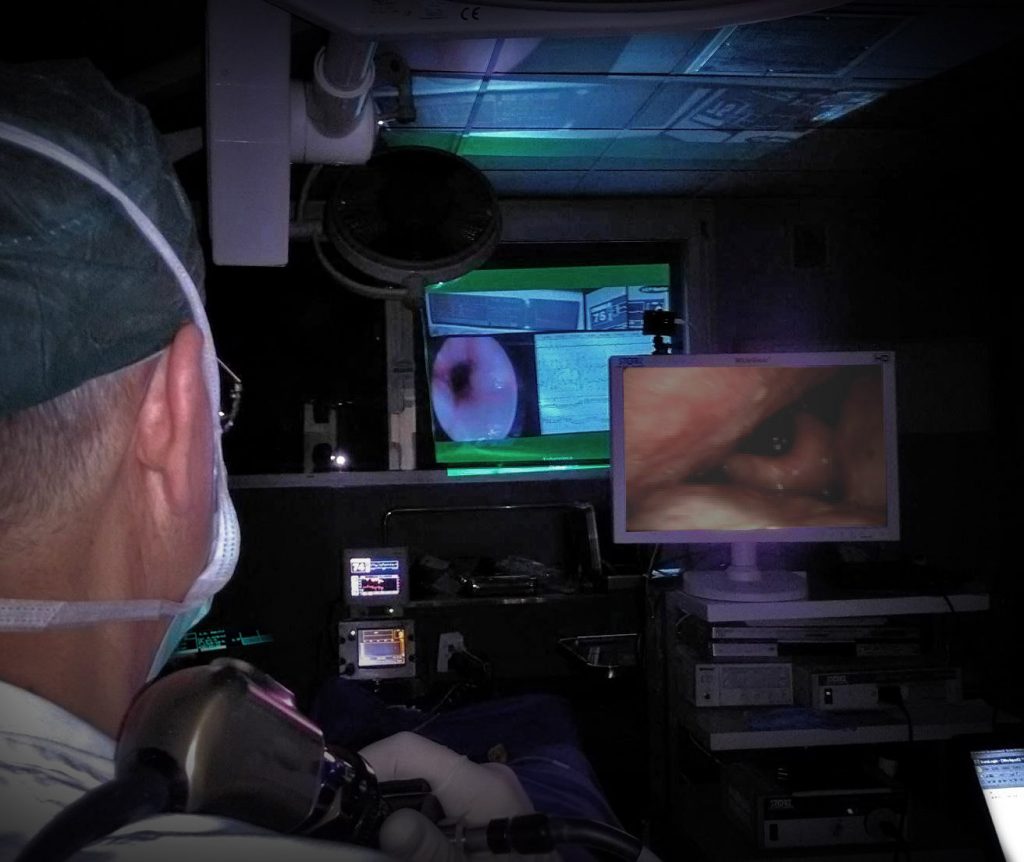
Our DISE setting uses:
- an Endoscopy Screen (video tower) for endoscopy upper airway (UA);
- a HSAT (Home Sleep Apnea Testing), i.e. a polygraphic system synchronized to video;
- a TCI pump (Target Controlled Infusion)* for Propofol computerized administration;
- a BIS (Bispectral index), i.e. a sedation monitoring through an EEG derivated signal;
- a MLAEPi (Middle Latency Auditory Evoked Potential) system.
* not available in the US
Using 5VsEs prototype, we can see:
- the endoscopic upper airway view (OSA collapse pattern);
- the polygraphic pattern, synchronized to endoscopic view as a cross control;
- the pharmacokinetics and pharmacodynamics of Propofol (through TCI pump monitor), for a correct drug management;
- the level of sedation (through the BIS value) to easily recognize pharmacological Central Apnea;
- in parallel to BIS, the Middle Latency Auditory Evoked Potential index (MLAEPi) recorded for research.
MLAEPi was used for the first time during DISE in our scientific investigation and was tested for a comparison with BIS to evaluate which of the two methods was faster in determining the level of sedation.
MLAEPi is usually used in Anesthesiology and intensive care as measurement of sedation level for the measurement of coma depth.
Endoscopy screen
HSAT
TCI Pump
BIS
MLAEPi
The Big Single Screen (5VsEs prototype) showe and stores all decisional parameters in a parallel mode.
(Single Screen: patent 202018000003044, 02020000050401)
Current DISE standard is difficult to manage because it shows the decisional parameters on 3 o more different monitors, so the operator has to manage simoultaneosly 3-4 different data sources from 3-4 different devices.
Current DISE standard allows to record and store endoscopy only. Thus it does not allow a post analysis because DISE procedure is partially documented.
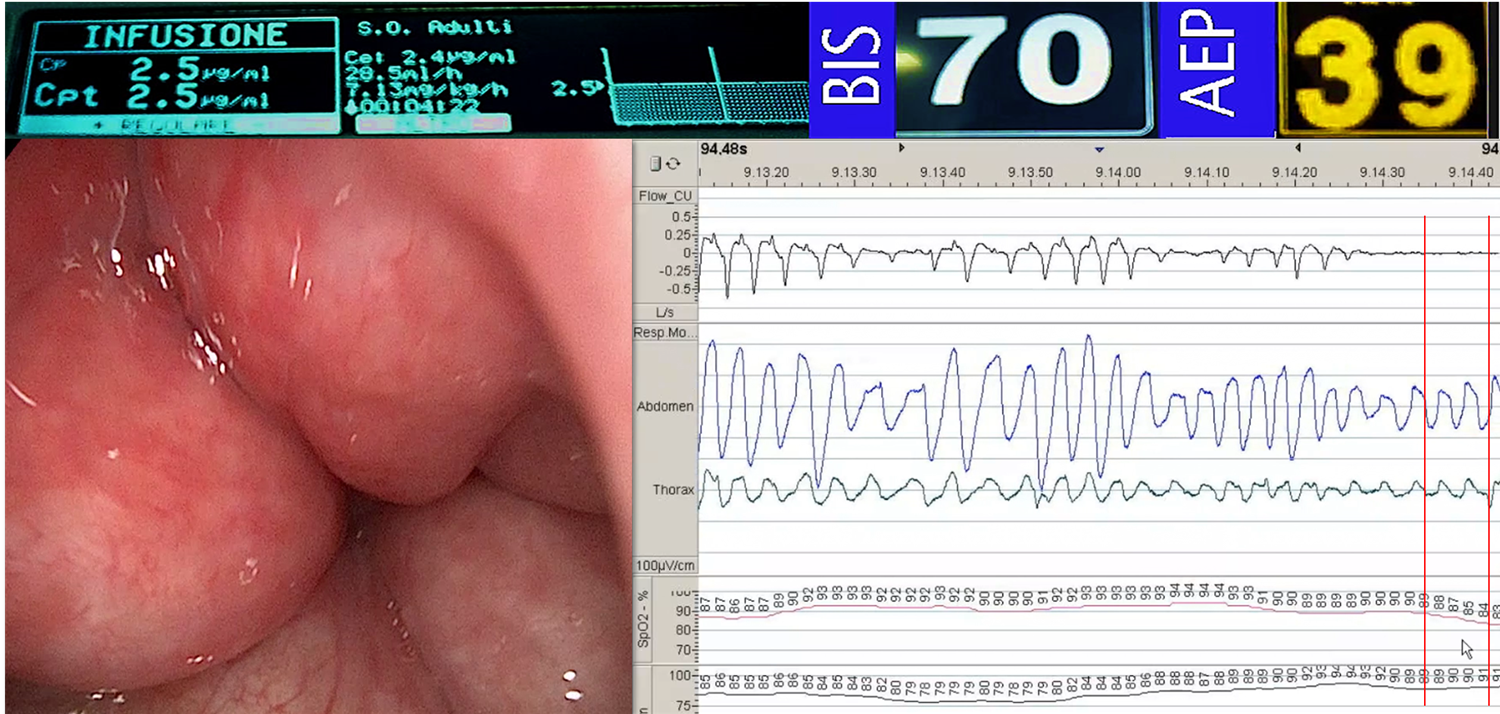
Part of the trace / events relating to endoscopy
Methods And Sedation Monitoring
5VsEs was designed for the following study program.
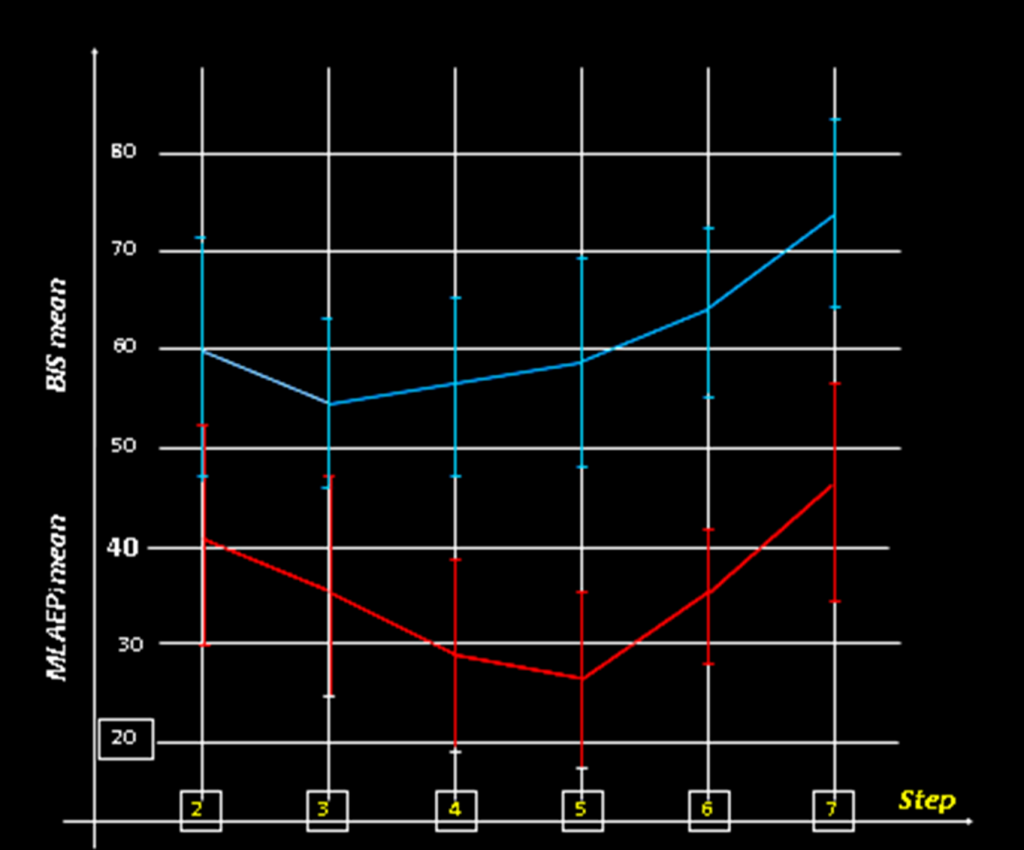
1-Start DISE Procedure; 2-Loss of Consciousness ; 3-Snoring Pre-Event; 4-1st EVENT;
5-Snoring Post-Event; 6-2nd EVENT; 7-Awakening; 8-End DISE Procedure
5VsEs prototype
To compare MLAEPi to BIS, the DISE procedure was divided into eight steps, and we collected both MLAEPi and BIS data values from the same patient in every step.
From April 2015 to December 2019, we recruited 99 patients affected by snoring or OSA, as defined by the American Academy of Sleep Medicine (AASM).
Men 89.69%
Women 10.31%
Mean age 49.8 (SD=13.1)
Body Mass Index (BMI) 28 (SD=3.6)
For data comparative analysis, we recorded all the numerical values of the two different indexes of sedation level evaluation methods (MLAEPi and BIS), which were detected for the same patient at the same time and during equal steps of DISE, with the aim of studying the performance of the MLAEPi Vs BIS. [9]
This study indicated that MLAEPi and BIS responses have different dynamic ranges.
The slope of the MLAEPi response was greater than the one of BIS, which indicates a faster response of the MLAEPi Vs BIS in the first phases of DISE procedure.
Furthermore MLAEPi not only responds more quickly than BIS, but also moves over a wider range value.
The faster response of the MLAEPi is the most important data of this study.
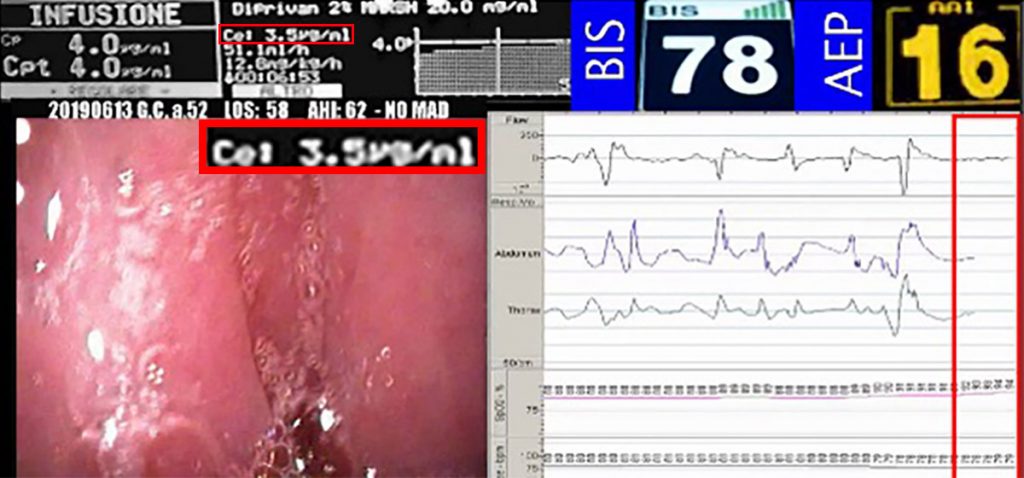
MLAEPi can improve diagnosis because it can avoid the diagnostic error of labeling the event shown on the monitor as obstructive apnea when it could be an undesirable Propofol-induced central apnea.
It is important to underline that central apneas are error sources as well as important risk factors for the ongoing DISE procedure.
This figure shows a faster response of MLAEPi Vs BIS.
The predicted effect site Propofol concentration was 3.5 µg /ml.
The BIS value was 78.
In this type of multiparametric evaluation (5VsEs monitor), the MLAEPi, thanks to its highest response speed, was equal to 16, perfectly coherent with the context of endoscopic pattern and the polygraphic findings of CSA (Central Sleep Apnea).
Conclusions
Our patented 5VsEs prototype improves the diagnosis by improving the ergonomics of use of the instruments (like an aeronautical cockpit);
Furthermore it improves research because it allows a complete data archiving (like an aircraft black box)
and also produces accurate medical-legal and educational documentation.
Thanks to its faster response speed, MLAEPi seems to be a good alternative to BIS in evaluating the sedation level during Propofol-DISE.
click and rotate to explore
References
- Benjafield AV, Ayas NT, Eastwood PR, Heinzer R, Ip MSM, Morrell MJ, et al. Estimation of the global prevalence and burden of obstructive sleep apnoea: a literature-based analysis. The Lancet. Respir Med 2019, 7(8), 687-98.
- Kotecha, B.; De Vito, A. Drug induced sleep endoscopy: Its role in evaluation of the upper airway obstruction and patient selection for surgical and nonsurgical treatment. J. Thorac. Dis. 2018, 10, S40-S47.
- Park, D.; Kim, J.S.; Heo, S.J. Obstruction patterns during drug-induced sleep endoscopy vs natural sleep endoscopy in patients with obstructive sleep apnea. JAMA Otolaryngol. Head Neck Surg. 2019, 145, 730-734.
- Van den Bossche K, Van de Perck E, Kazemeini E, Willemen M, Van de Heyning PH, Verbraecken J, Op de Beeck S, Vanderveken OM. Natural sleep endoscopy in obstructive sleep apnea: A systematic review. Sleep Med Rev. 2021 Dec.
- Carrasco-Llatas, M.; Zerpa-Zerpa, V.; Dalmau-Galofre, J. Reliability of drug-induced sedation endoscopy: Interobserver agreement. Sleep Breath. 2017, 21, 173-179.
- De Vito, A.; Carrasco Llatas, M.; Ravesloot, M.J.; Kotecha, B.; De Vries, N.; Hamans, E.; Maurer, J.; Bosi, M.; Blumen, M.; Heiser, C.; et al. European position paper on drug-induced sleep endoscopy: 2017 Update. Clin. Otolaryngol. 2018, 43, 1541-1552.
- Arigliani, M.; Toraldo, D.M.; Montevecchi, F.; Conte, L.; Galasso, L.; De Rosa, F.; Lattante, C.; Ciavolino, E.; Arigliani, C.; Palumbo, A.; et al. A New Technological Ad-vancement of the Drug-Induced Sleep Endoscopy (DISE) Procedure: The “All in One Glance” Strategy. Int. J. Environ. Res. Public Health 2020, 17, 4261.
- Matsushita, S.; Oda, S.; Otaki, K.; Nakane, M.; Kawamae, K. Change in auditory evoked potential index and bispectral index during induction of anesthesia with anesthetic drugs. J. Clin. Monit. 2014, 29, 621-626.
- Arigliani, M., Toraldo, D.M., Conte, L., Arima, S., Lattante, C., Ciavolino, E., Arigliani, C., Palumbo, A., De Benedetto, M. The Use of Middle Latency Auditory Evoked Potentials (MLAEP) as Methodology for Evaluating Sedation Level in Propofol-Drug Induced Sleep Endoscopy (DISE) Procedure. Int. J. Environ. Res. Public Health 2021, 18